How Many Stages Does Implant Treatment Take to Complete?
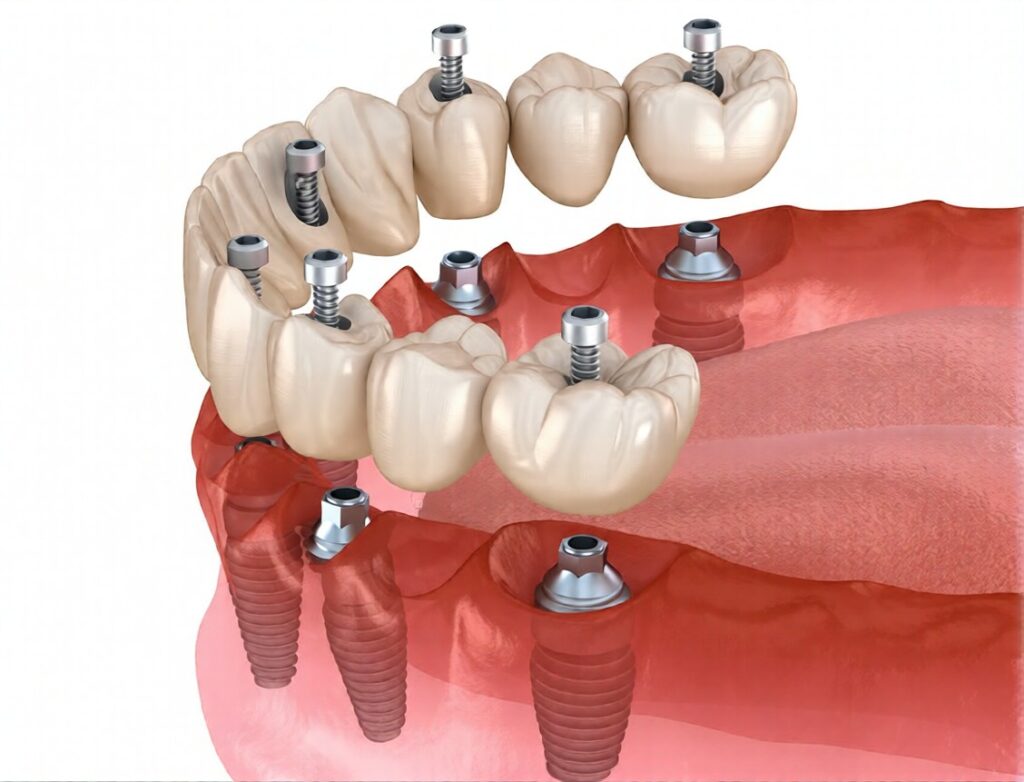
Dental implants, one of the most preferred methods for treating missing teeth today, stand out for their close resemblance to natural teeth in appearance and function. However, one of the most frequently asked questions by patients considering implant treatment is:
How many stages does implant treatment consist of and how long does the process take?
Implant treatment generally consists of several basic stages, although it may vary depending on the patient’s oral and bone structure. When proper planning is done, the process progresses in a comfortable and controlled manner.
1. Examination and Treatment Planning
The first stage of implant treatment is a detailed examination of the mouth and teeth.
During this stage, the physician will:
- Examine the area of the missing tooth
- Evaluate the condition of the jawbone
- Check the health of the gums
- Perform necessary radiological imaging
- Create a suitable plan for the implant
Since each patient’s oral structure is different, implant treatment should be planned individually.
2. Placement of the Implant into the Jawbone
After the planning is completed, the implant is placed into the jawbone through a surgical procedure.
The implant is an artificial tooth root made of biocompatible materials that mimics the root of the missing tooth. Since the procedure is performed under local anesthesia, the patient does not feel pain during the process.
The duration of the procedure may vary depending on the number of implants to be placed and any additional procedures to be performed.
3. Healing and Osseointegration Process
After the implant is placed, a healing period is required for the implant to integrate with the jawbone.
This process is referred to as osseointegration . The healthy integration of the implant with the bone is crucial for the long-term success of the treatment.
The healing duration may vary from person to person depending on:
- The structure of the jawbone
- The application area
- The patient’s overall oral health
- Any necessary additional treatments
In some suitable cases, temporary tooth applications allow the patient to continue their daily life without being toothless during this process.
4. Preparation and Placement of the Prosthetic Tooth
After sufficient compatibility of the implant with the bone is achieved, the process moves to the superstructure stage.
At this stage, the following can be placed on the implant, prepared according to the patient’s oral structure:
- Porcelain crown
- Zirconium crown
- Bridge or other prosthetic restorations
The color, shape, and size of the tooth are planned to be compatible with other natural teeth.
How Long Does Implant Treatment Take?
The duration of implant treatment completion is not the same for every patient.
In cases with simple and suitable bone structure, the process may progress more quickly, while in situations requiring bone deficiency or additional surgical procedures, the treatment duration may be extended.
Especially if additional procedures such as bone grafting or sinus lifting are required, the treatment plan may vary.
Therefore, the duration of implant treatment can only be more clearly determined after a detailed examination and imaging.
Is Implant Treatment a Painful Procedure?
Implant application is generally performed under local anesthesia, so no pain is felt during the procedure.
After the procedure, mild pain, sensitivity, or swelling may occur. This condition usually decreases within a short period for most patients and can be managed with the care process recommended by the physician.
Conclusion: Implant Treatment is Planned Individually
Implant treatment generally consists of basic stages including examination and planning, placement of the implant, healing process, and application of the prosthetic tooth .
However, each patient’s bone structure, oral health, and needs are different. Therefore, the treatment duration and methods to be applied should be determined individually.
The most important step in a successful implant treatment is accurate diagnosis and detailed treatment planning.
You can plan your implant treatment process with a specialist dentist for a healthy and naturally looking *smile*.
Leave a comment
Share your questions and experiences. Comments are published after review by the dentist.