Are you using dental floss correctly?
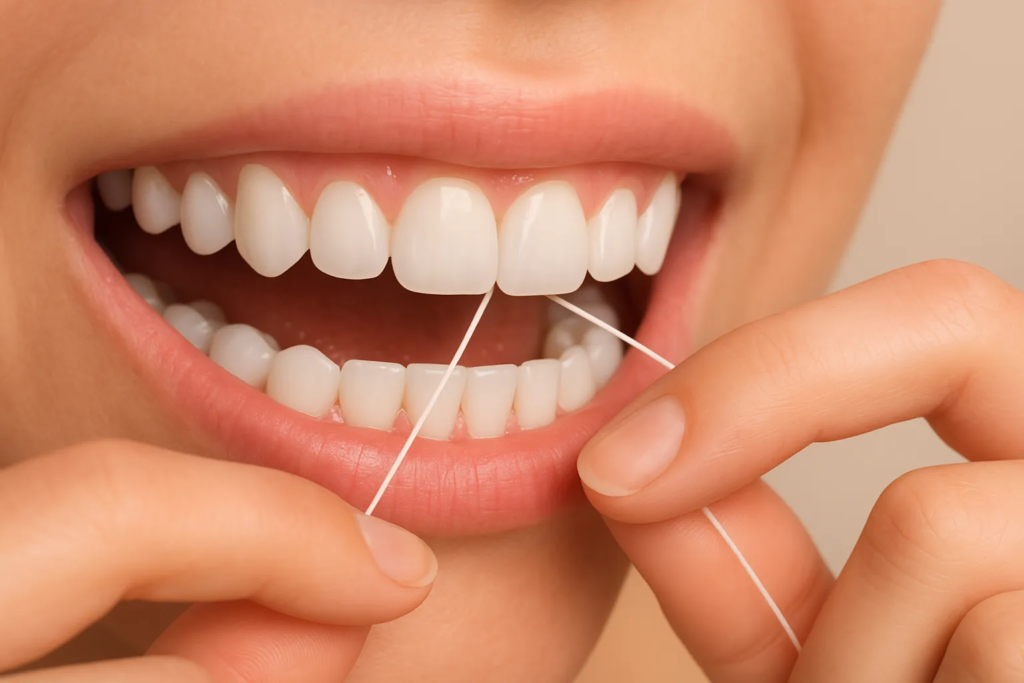
You may be brushing your teeth regularly every day. However, plaque and food debris that accumulate in areas that the toothbrush cannot reach can negatively affect the health of your teeth and gums over time.
That’s where dental floss comes into play.
Using dental floss is an important part of your oral care routine. However, many people either use dental floss irregularly or do not apply it with the correct technique. So, are you really using dental floss correctly?
Why Should Dental Floss Be Used?
Although a toothbrush effectively cleans the visible surfaces of the teeth, it may not always reach the narrow spaces where the teeth touch each other.
Dental floss;
- Helps to remove food debris that accumulates between the teeth.
- Supports the removal of plaque that forms on the tooth surfaces.
- Contributes to the preservation of gum health.
- May help reduce accumulations that can cause bad breath.
- Makes daily oral care more comprehensive.
This is why simply brushing your teeth may not always be sufficient on its own for an oral care routine.
How to Use Dental Floss Correctly?
Using dental floss effectively requires the right technique.
1. Take an Adequate Length of Dental Floss
Take about 30–40 cm of dental floss. It will be easier for you to control it by wrapping most of the floss around your middle fingers.
2. Gently Insert the Floss Between Your Teeth
Do not forcefully and suddenly insert the dental floss between your teeth. Move it gently and in a controlled manner.
Otherwise, irritation or sensitivity may occur in the gums.
3. Create a “C” Shape Around the Tooth
Instead of just moving the dental floss up and down, ensure that the floss makes contact with the tooth surface.
Gently curve the floss around the tooth to form a “C” shape and move it up and down gently.
This method helps to clean the plaque on the tooth surface more effectively.
4. Use a Clean Section of Floss for Each Tooth Gap
Instead of cleaning all the gaps with the same section, use a clean part of the floss as you progress.
This way, the transfer of bacteria from one area to another can be minimized.
5. Gently Reach Below the Gum Line
It is important to guide the dental floss just below the gum line in a controlled manner.
However, applying excessive pressure or making harsh movements can harm the gums. The goal is not to force the gums but to gently clean the accumulations between the tooth and the gum.
Should Dental Floss Be Used Before or After Brushing?
While there are different habits regarding this, the important thing is to make dental floss a part of your daily oral care routine.
Regular use of dental floss helps to clean between the teeth. An effective brushing afterward completes the oral care.
The best routine should be determined according to your personal oral and dental health needs based on your dentist’s recommendations.
Is It Normal for My Gums to Bleed When Using Dental Floss?
You may notice bleeding in your gums when you start using dental floss. This situation may sometimes be related to existing gum sensitivity or gum problems.
However, it is important not to completely ignore gum bleeding and consider it normal.
If the bleeding continues or is accompanied by other symptoms, it is important to consult a dentist.
Is Dental Floss Suitable for Everyone?
Dental floss is a beneficial tool for daily oral care for many people. However, the width of the gaps between the teeth, orthodontic treatments, implants, or bridges may require different interdental cleaning tools.
For example, for some individuals;
- Interdental brush
- Super floss
- Oral irrigator
alternative methods may be recommended.
Therefore, it is important to choose the right cleaning tool suitable for the oral structure rather than a single method for everyone.
Conclusion: A Healthy Smile Starts Between the Teeth
Cleaning the visible surfaces of the teeth is as important as cleaning the unseen spaces for oral health.
Using dental floss with the correct technique and regularly can help complete your daily oral care routine.
Remember; a healthy smile is made not only from visible teeth but also from unseen details.
Do not neglect your regular dental check-ups to learn which method is most suitable for cleaning between your teeth.
Leave a comment
Share your questions and experiences. Comments are published after review by the dentist.